
At a glance
- Get the accommodation all sorted and the vets in contact prior to arrival.
- Keep the hay and water available at all times and check each rabbit not just the bowls.
- Build trust at floor level and let the rabbits settle in at their own pace.
Decide whether rabbit life fits your household
Rabbits require daily care even when the house is busy. They can be quite engaging and many will prefer to just sit with you rather than be carried. You'll find hay all over the feeding area, fur all over the place during molting and a living area which is basically set up around chewing and exploring. An adult has to take responsibility for the care, the costs and the decisions about veterinary treatment.
Before you go ahead and adopt, agree on the morning and evening checks, where the rabbits will live, who will be on hand in the event of holiday or one of the rabbits becoming unwell. Find out about their temperament, their routines, their health history and whether they have a compatible bonded pair. Human company will not substitute for the social contact of another rabbit. Don't just put two unfamiliar rabbits together and hope for the best; arrange for experienced help with the introductions and discuss neutering with a rabbit-experienced vet.
Reference: RSPCA guidance on companionship
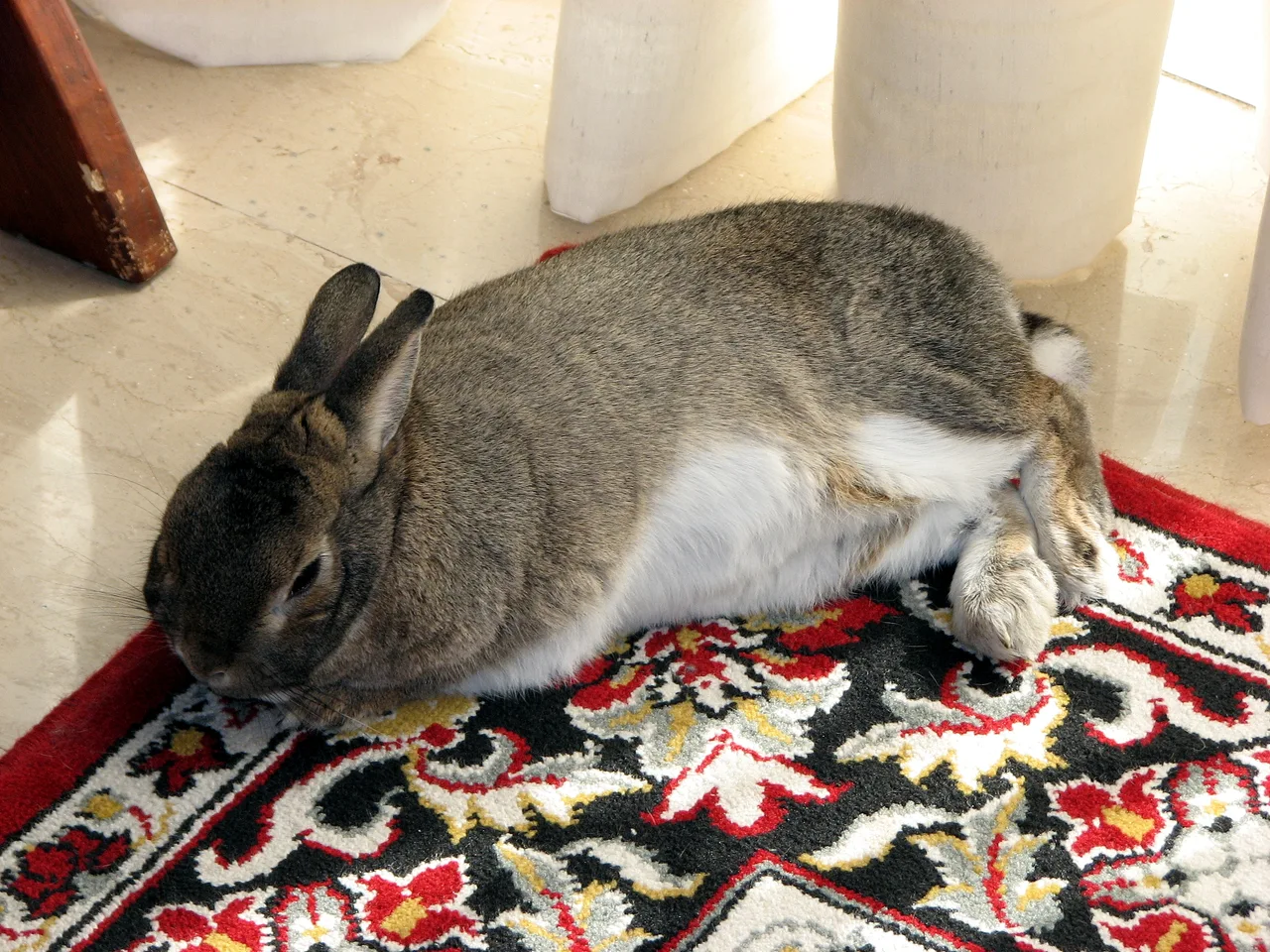

Have the home ready before arrival
Start with a secure, roomy home base which has shelter, resting space, litter trays, fresh hay and water. It has to work overnight and when you're away from it, not just when you open an exercise pen. The RWAF recommend a continuous floor area of at least 3m x 2m with a height of 1m for two average sized rabbits (larger animals will of course need more space). This is a welfare reference point rather than a reason to stop at the minimum.
Just go through the indoor set-up guide prior to buying any furnishings. Put the carrier in the designated area, open it and let the rabbits come out on their own. Keep visitors and other pets well clear during the settling in period. Start with their normal foods and note any previous feeding instructions.
Before the carrier comes home
Secure the living area and check the route from the entrance.
Hay, good food, clean water and plenty of litter trays.
A carrier which seals securely and is accessible in an emergency.
Daytime vet and out of hours number all on your phone.
Health records, any medication instructions (if applicable) and a named backup carer.
Build meals around hay and observation
A healthy adult rabbit's diet should be predominantly good quality hay or grass with a good proportion of leafy greens and a measured amount of rabbit pellets. Fresh hay and clean water should always be available. You should start off with the foods the rabbit is used to and then introduce any changes very gradually. A young rabbit, a pregnant rabbit, a rabbit that is underweight or a rabbit that is unwell will all require a plan that is specific to their individual situation rather than simply an adult ration taken from a chart.
Part of the routine | What to do |
|---|---|
Hay | Refresh accessible piles or safe holders and discard wet or spoiled material. |
Greens | Use identified rabbit-safe plants, wash them, and gradually introduce unfamiliar choices. |
Pellets | Measure the agreed ration; don't keep topping up a bowl without checking intake. |
Treats | Keep them limited; carrots and fruit are not the foundation of a rabbit diet. |
Water | Check the supply works and stays clean; wash containers and refill daily. |
Watch each rabbit eat. Food disappearing from a shared bowl doesn't mean both animals are eating normally. Record changes in an individual’s appetite and droppings rather than assuming a new favorite food will fix it.
Reference: RSPCA rabbit diet guidance
Use a daily routine you can repeat
Use the following as a household planning aid and adjust the cleaning accordingly. The object is to be aware of each animal and to keep the house comfortable rather than to go through the exercise of ticking off a list without actually looking at the rabbits. Make it as easy as possible to hand over the care: label the supplies, put the scoop with the feed and keep the contact sheet in one very obvious place.
Observe and refresh
See each rabbit move and eat. Check the water, the hay, the droppings and the resting area. Remove the wet litter and any spoiled food.
Reconnect and reset
Check the rabbits over again. Top up the supplies, have a look around the space and just be calm and present with them whilst they're awake.
Look for patterns
Check the care notes, the supplies and any household changes. Plan your deeper cleaning around the soiling and arrange your grooming and nail checks as appropriate.
A very brief record is all that's required: date, each rabbit's appetite and droppings, any change and what action was taken. A photo can be useful in explaining a problem to the vet, but don't put off phoning just to get the perfect shot. Your carer need to know what is normal for these particular rabbits, not just where the food is.
Make interaction and enrichment feel safe
Sit at floor level and allow the rabbit to come to you voluntarily. Be quiet and just be there before you attempt to stroke or lift it. If you do need to lift it, support the chest and the hindquarters well, keep it close to you and ask your vet or rescue to show you how. Never lift by the ears and never put a rabbit on its back to still it.
Provide hiding places, safe areas for chewing and foraging and plenty of open floor space to move about in. A plain cardboard box will do (remove the tape and staples and plug any unsafe holes) and will be adequate as long as you inspect it as it is chewed. Don't fill the whole floor with toys. Do keep some of the familiar features when you're altering the activity and see whether the animals will use them.
Start on litter training as part of this stable set up. Go at the rabbits' pace rather than expecting perfect habits after a set number of days. Use our safe nail trimming guide and get help if you find it at all difficult to handle them.
Reference: RSPCA behavior and handling guidance
Plan the first month without rushing it
Stage | Your priority | A useful sign to record |
|---|---|---|
Before arrival | Prepare housing, food, records, and access to veterinary care. | The home works with the door closed and the humans away. |
First days | Keep food and surroundings familiar; observe quietly. | Each rabbit eats and passes droppings normally. |
As they settle | Develop litter routines and voluntary interaction. | They choose to explore, rest and return to familiar areas. |
Later in the month | Review safe access to more space and the care workload. | You know their individual habits and can explain them to a carer. |
This is a planning sequence, not a health timeline or training deadline. Don't wait out poor appetite as normal settling-in. If one task is difficult, identify the obstacle: a slippery route, inaccessible tray, noisy room, or uncertainty about handling. Fix that issue before adding more activities.
A good end of month review is: can we clean without chasing the rabbits? Can we see both animals eating? Is the vet info up to date? Can someone else do the routine? Use the answers to that to improve the set up rather than judge your progress on how much handling the rabbits will put up with.
Arrange preventive care and know when to call
Book a rabbit-experienced veterinary practice and go over the vaccinations that are available and recommended in your area, neutering, dental health, weight, parasites and grooming. Indoor living in no way obviates the need for preventative care. Keep a record of what you've given and when your next appointment is due. Check the back end regularly (particularly in warm weather) and get urgent advice if you see maggots or suspect flystrike.
Breathing difficulty, collapse, serious injury, or suspected poisoning all require urgent help. Let the practice know when you last saw normal eating and droppings, any recent changes and any medications your rabbit is receiving. They'll give you advice on transport and care whilst you're on the move. Don't start any medication or force feed without veterinary instruction.
Reference: PDSA advice on reduced appetite
Budget for the routine and the unexpected
Use local quotes rather than an old universal annual price. Split the initial setup cost from the ongoing supplies and vet costs. A low adoption fee in no way equates to low ongoing cost. Make sure the practice you're looking at actually does rabbits and find out about out of hours arrangements.
Category | Write down |
|---|---|
Initial setup | Adoption, safe enclosure, floor protection, trays, carrier and furnishings. |
Recurring supplies | Hay, food, litter, cleaning and replacement materials. |
Planned care | Examinations, vaccination and neutering as advised locally. |
Unexpected care | Emergency access, transport and a reserve or suitable insurance. |
Time away | A capable carer who can observe each rabbit and obtain help. |
Give the backup carer a written handoff with the normal food routine, individual descriptions, veterinary contacts, where the carrier is kept, and permission arrangements for urgent treatment. Extra food in a bowl cannot replace someone checking the animals.
Common questions
Can rabbits live their entire lives indoors?
Yes with a spacious secure home, appropriate companionship, rabbit proofing, exercise and daily care. A small cage with some time out is not an indoor arrangement at all.
When should I allow the new rabbits to explore more of the house?
Once the new area is fully secured and you've got a good understanding of their routines, introduce access slowly, while still allowing them their familiar home base. Don't withhold enough living space while you wait for them to get their litter habits completely sorted. How much freedom you give them will also depend on the rabbit—some will jump over gates and explore everywhere; others may be content to stay in a smaller room and hide under the bed.
Sources & editorial notes
Revised October 21, 2026 using the references below. This is an editorial review, not independent veterinary approval. For advice about your animal, consult a qualified veterinarian.
- RWAF — Indoor rabbit housing
- RSPCA — Rabbit diet
- RSPCA — Rabbit companionship
- PDSA — Keeping rabbits healthy
- PDSA — Reduced appetite in rabbits
- RSPCA — Rabbit behaviour and handling
- RSPCA — Rabbit enrichment
What changed in this guide?
New foundational guide with a first-month plan, daily checks, realistic budgeting and connected setup/training guides. User-reviewed wording imported October 21 2026; unsupported GI stasis ranking held for editorial review. Personal experience prompts remain private. Owner-reviewed Google Docs imported October 21; private prompts excluded; formatting damage and explicit safety wording repaired. Original snapshots retained.
Originally published . New guide created for the local site.
A little knowledge.
A more thoughtful home.